Acceptance of grassroots-level science and technology project: "Research, design, and manufacture of a gasoline consumption mass measuring device to evaluate the fuel economy of automobiles for training and research purposes
In the context of increasing attention to energy saving and emission reduction in the transportation sector, accurately evaluating the fuel consumption of automobiles is of great significance for training, research, and vehicle inspection. The research project led by MSc. Ngo Quang Tao has successfully designed and manufactured a device for measuring the mass of gasoline consumed by automobiles under actual operating conditions, opening up many application prospects in training and research at the School of Mechanical and Automotive Engineering (SMAE), Hanoi University of Industry (HaUI).
The evaluation and acceptance council, chaired by Dr. Nguyen Van Thien – Vice Rector of HaUI, included the participation of experts and scientists in the fields of Dynamic Mechanical Engineering and Automobiles. With the reality of an increasing number of automobiles, the requirement for efficient energy use, fuel savings, and environmental emission reduction is becoming an inevitable trend. Accurately determining the fuel consumption of vehicles under actual operating conditions not only meets energy labeling regulations but also contributes to improving the quality of training, research, and experimentation at the school.
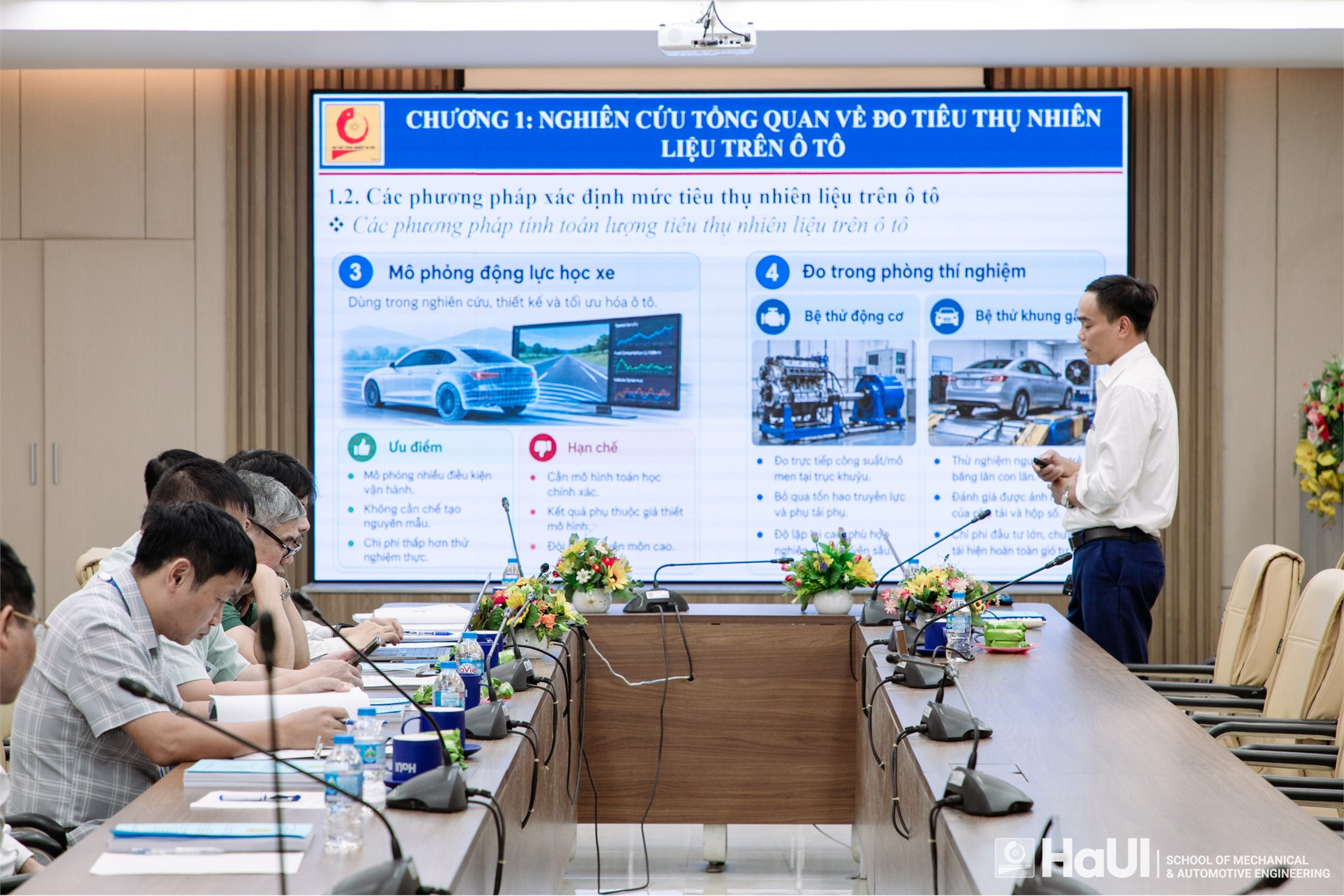
Overview of the grassroots-level science and technology project Acceptance Council
However, current specialized fuel consumption measurement systems often require large investment costs and pose difficulties in exploitation and maintenance for teaching purposes. Based on this reality, the research team led by MSc. Ngo Quang Tao implemented the project with the goal of designing and manufacturing a gasoline consumption mass measuring device with high accuracy, the ability to be installed directly on automobiles, and stable operation under actual conditions.
Besides the function of measuring consumed fuel, the system is also integrated with the capability to simultaneously collect many important vehicle operating parameters such as velocity, engine speed, throttle opening, and braking force. This is the basis for comprehensively evaluating the factors affecting fuel consumption and building experimental data for university and postgraduate research and training. The highlight of the project is the successful development of a solution to directly measure the mass of fuel consumed by the vehicle during actual operation, instead of only performing it in a laboratory environment like many previous studies.
The completed device has been inspected, calibrated, and issued a measurement result certificate at the Vietnam Metrology Institute. Test results on 5 actual driving cycles show that the system operates stably, and the collected parameters have high accuracy and reliability when compared with data from diagnostic equipment.
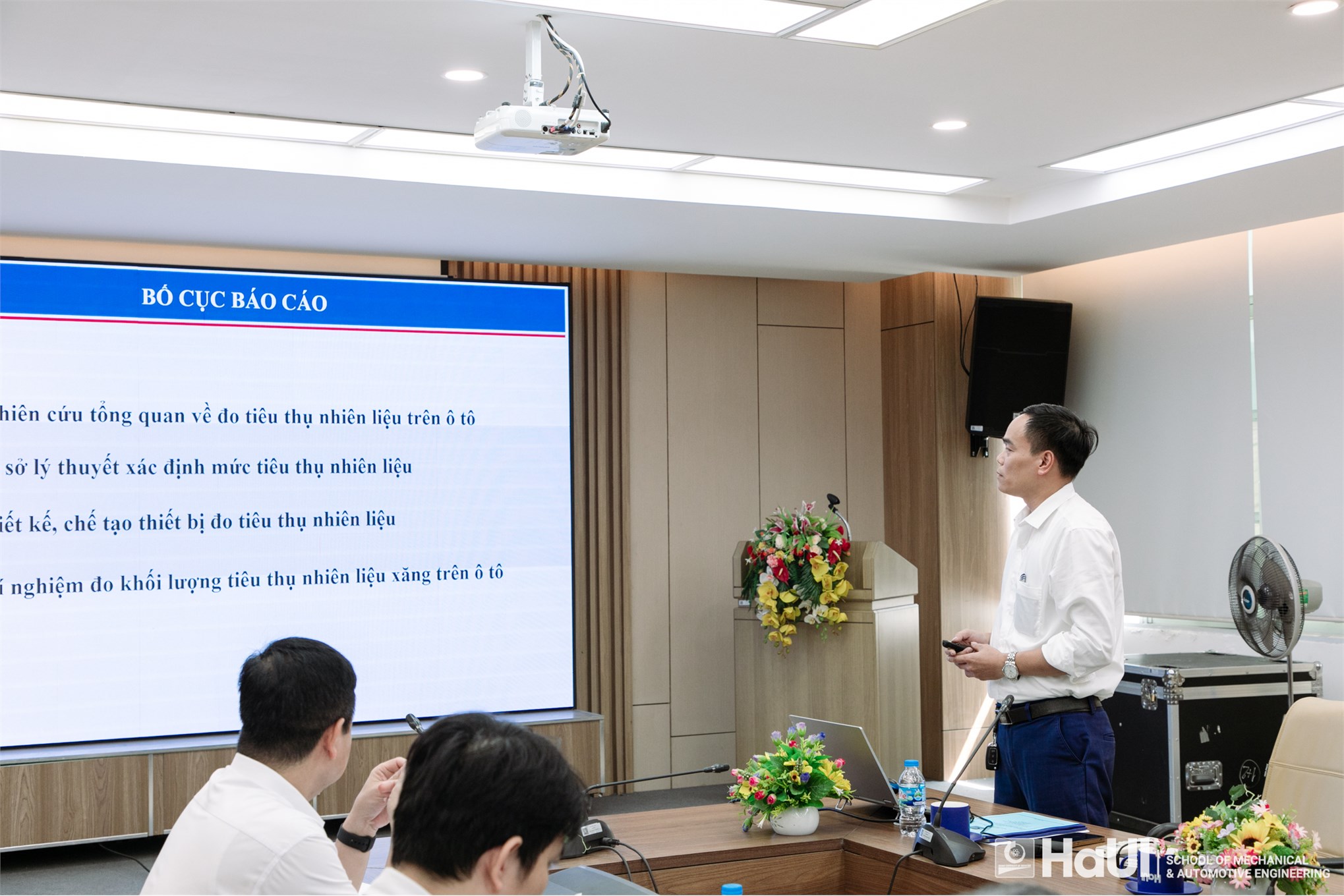
MSc. Ngo Quang Tao – Project Manager presented the report to the acceptance council
Evaluating the implementation results, the Acceptance Council acknowledged the serious research spirit, scientific approach, and practical values that the project brings. The Council unanimously evaluated that the project met the acceptance requirements and recommended that the research team continue to perfect the product and expand its application capabilities in in-depth research directions on automobiles and energy.
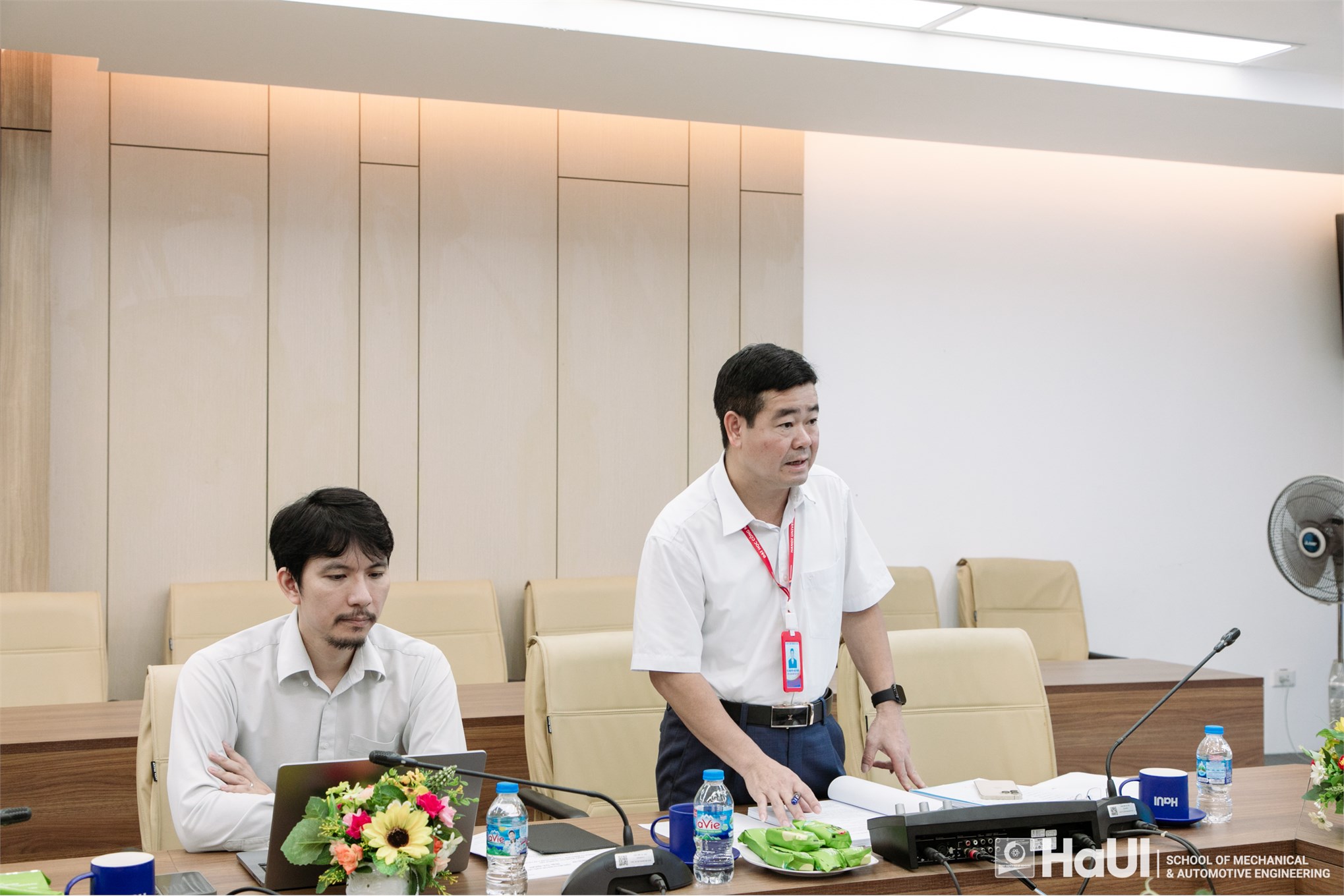
Dr. Nguyen Van Thien – Chairman of the Council concluded at the acceptance council
The project's results not only contribute to supplementing equipment for training and research at the SMAE but also open up potential applications in inspecting and evaluating the fuel economy of transportation vehicles in reality. In the coming time, the research team will continue to perfect the device towards improving accuracy, optimizing anti-vibration capabilities when the vehicle operates on various road surface conditions; expanding the application scope for multiple types of automotive fuel systems; while simultaneously integrating smart control and monitoring technology for real-time data display and automatic storage, aiming towards product commercialization and effectively serving training and scientific research activities.
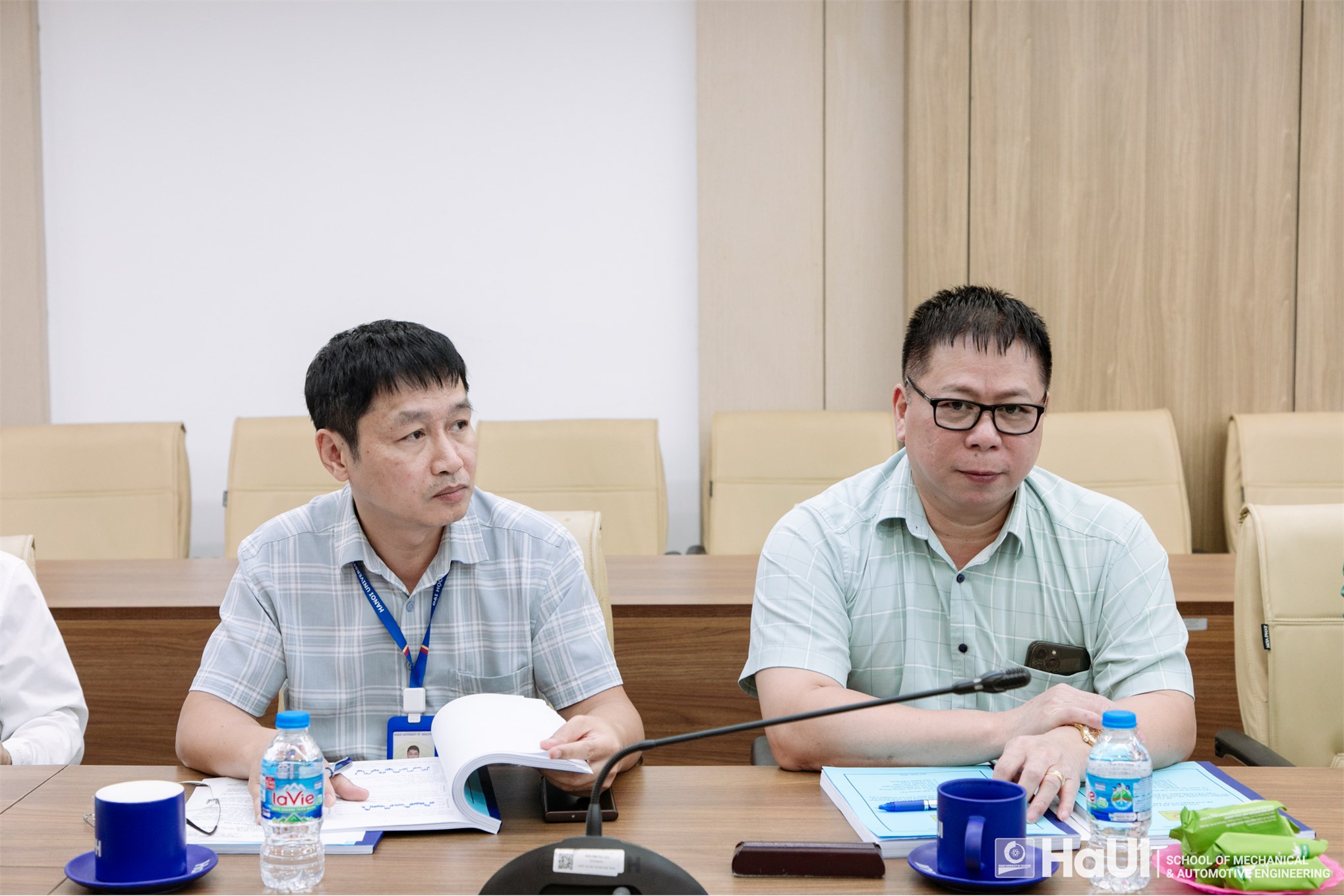
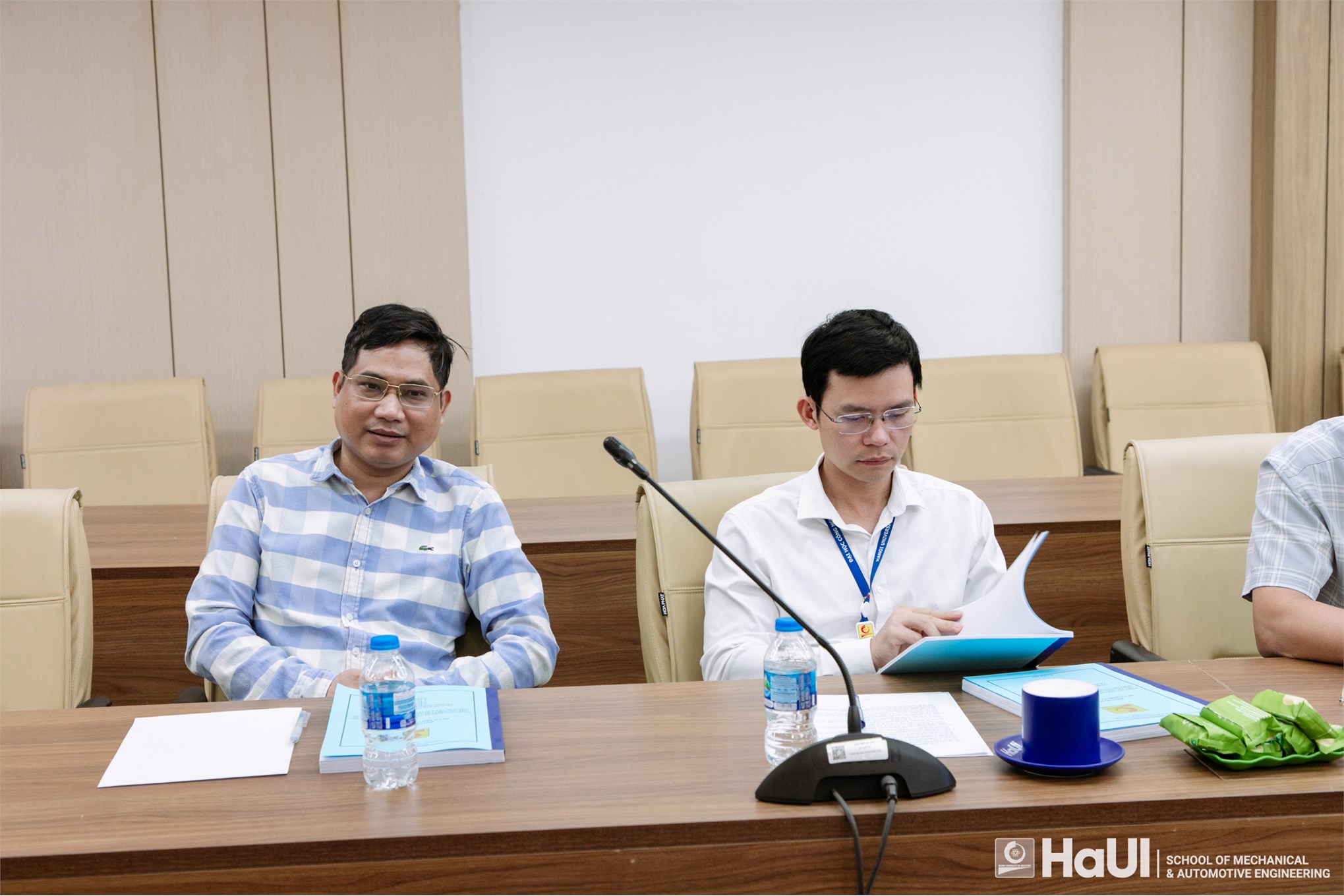
* SOME IMAGES AT THE GRASSROOTS-LEVEL SCIENCE AND TECHNOLOGY PROJECT ACCEPTANCE COUNCIL:

Saturday, 11:27 10/10/2026

Analysis and Prediction of the Operating Condition of Common Rail Injectors in Diesel Engines under Different Working Conditions Using Experimental Methods Combined with Artificial Intelligence Models
Thứ Bảy, 15:30 30/05/2026
Institutional-level evaluation and acceptance of a university-level scientific research project on biomimetic composite shells integrated with piezoelectric layers.
Thứ Bảy, 10:23 07/03/2026
PhD Candidate Nguyen Hong Tien majoring Mechanical Engineering successfully defended his doctoral dissertation
Thứ Ba, 15:16 10/02/2026
PhD Dissertation Seminar for PhD student Khuat Duc Duong – Mechanical Engineering
Thứ Bảy, 13:42 03/01/2026Copyright © 2022 School Of Mechanical And Automotive Engineering